
The pulley block is essential to smooth and regulated operations in industrial settings where rising and placing big objects is a regular need. For many years, the pulley block has been a reliable lifting solution in a variety of sectors because to its straightforward yet effective mechanical advantage. It offers dependability, efficiency, and safety whether utilized separately or in conjunction with a larger material-handling system. In order to improve load management and operational flexibility, the pulley block—which is closely related to manual lifting solutions—is frequently combined with a chain pulley. When combined, these techniques enable companies to lift objects precisely and with little effort.
Understanding the Working Principle of a Pulley Block
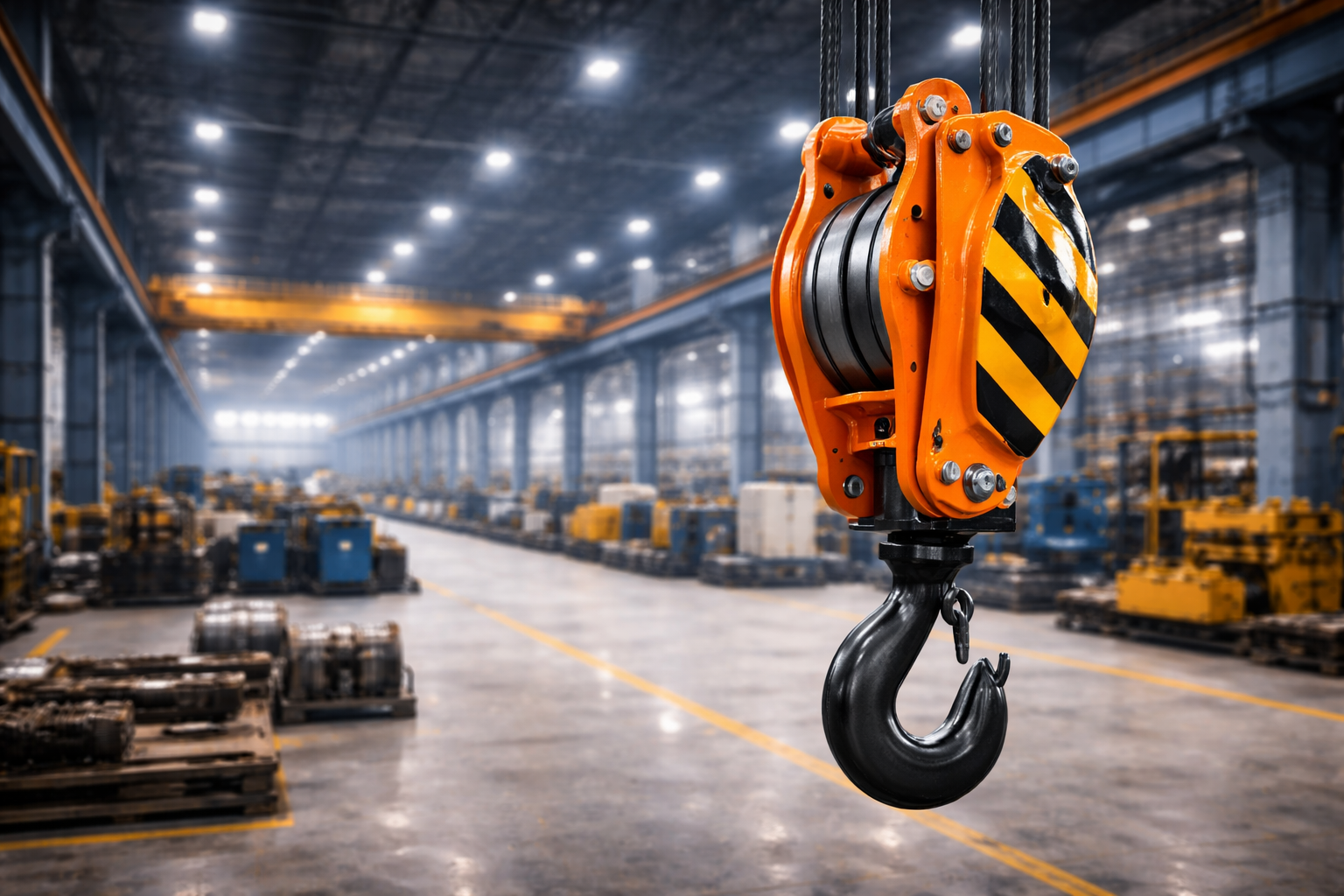
In order to facilitate the smooth passage of a rope or chain through a robust frame, a pulley block uses one or more grooved wheels. This configuration lessens the force needed to lift big objects and distributes the burden equally. The mechanical advantage is greatly increased when paired with a chain pulley, enabling the controlled movement of large weights. The design prevents abrupt load shifts by guaranteeing stability during lifting and lowering operations. Because of its reliable operation, pulley blocks may be used in a variety of industrial settings.
Importance of Chain Pulley Integration
One essential part that improves a pulley block system’s effectiveness is the chain pulley. By pulling a hand chain, which initiates the internal mechanism in charge of raising the load chain, it enables operators to lift loads. This integration guarantees smooth lifting action and provides exact control over load movement. Chain pulley systems are preferred by industries due to their ease of use, low power demands and reliable performance even under extreme circumstances. Pulley block and chain pulley work together to provide an effective lifting solution that effectively supports routine industrial activities.
Build Quality and Structural Strength
The design and material quality of a pulley block have an important effect on its longevity. Under continuous use, long-lasting performance is achieved by premium metals, perfectly machined sheaves and hardened chains. High loads may be supported by a well-engineered chain pulley system without experiencing wear or distortion. The protective shell prolongs the service life of internal components by protecting them from external damage, moisture and dust. Pulley blocks are dependable equipment in severe industrial environments because of their strong hooks with safety latches, which further improve operational security.
Applications Across Industrial Sectors
Numerous sectors, including manufacturing, fabrication, warehousing, maintenance, and assembly processes, heavily rely on pulley blocks and chain pulley systems. They are perfect for moving large machinery, aiding installation and repair work, and lifting machinery parts. They can be utilized in cramped areas where larger lifting equipment would not be practical due to their small size. Because of its adaptability, the pulley block is a vital lifting option for both long-term installations and short-term lifting needs.
Safety Features and Load Control
Any lifting activity must prioritize safety, and pulley blocks are made with features that guarantee safe weight handling. Unintentional slippage and uncontrollable movement are prevented by load brakes, guided chains, and secure hooks. Operators have more control over lifting speed and placement precision when paired with a chain pulley. These safety features lower workplace dangers and safeguard materials and operators. The safety performance of pulley block systems is further improved by routine inspection and appropriate use.
Ease of Installation and Operation
The simplicity of installation is one of the main benefits of pulley blocks. They need little setup and may be installed on hooks, trolleys, or beams. A wide range of users can employ chain pulley systems since they are easy to use and only require rudimentary training. In situations where electrical power is scarce or nonexistent, their manual functioning guarantees dependability. Their broad industry use can be attributed to their solid performance and simplicity.
Maintenance and Long-Term Performance
For pulley block systems to continue operating, routine maintenance is necessary. Continuous examination of hooks, sheaves, and chains aids in detecting wear and averting any malfunctions. Feeding moving components prolongs component life and lowers friction. Preventive maintenance methods help chain pulley systems function smoothly and safely under stress. Over time, proper maintenance lowers maintenance costs and downtime while also improving performance.
Cost-Effectiveness and Operational Efficiency
Pulley blocks are renowned for being reasonably priced. Their simple design leads to minimum operating costs and a lesser initial investment. They provide exceptional lifting efficiency without requiring intricate power systems when used in with a chain pulley. They are therefore a cost-effective option for companies looking for efficient lifting solutions under strict financial constraints. Long-term value for industrial operations is made possible by striking a balance between affordability and performance.
Adaptability to Modern Industrial Needs
Despite being founded on conventional mechanical principles, pulley blocks are now more efficient and safe because to current production processes. Their performance standards have been raised by enhanced braking systems, precision engineering, and superior materials. Additionally, chain pulley designs have changed to offer greater load capacity and better functioning. These developments guarantee that pulley block systems will continue to satisfy the changing needs of contemporary industry.
Enhancing Workplace Productivity
By lowering physical labor and handling time, effective lifting solutions have a direct effect on production. Operators can precisely position loads with pulley block and chain pulley systems, increasing workflow efficiency. Their dependability guarantees steady functioning, minimizing disruptions and delays. Industries may increase overall efficiency, safety, and organization by implementing these lifting tools into routine operations.
Because of its simplicity, reliability and flexibility the pulley block is still a vital lifting tool in industrial settings. It gives effective lifting ability, improved safety and specific load control when connected with a chain pulley. From heavy-duty lifting duties to typical maintenance, these systems continue to support a broad range of industrial applications. Industries can make sure safe operations, long-term durability, and maintained production by investing in high-quality pulley block and chain pulley solutions. As such, they are a valuable investment in any material-handling system.